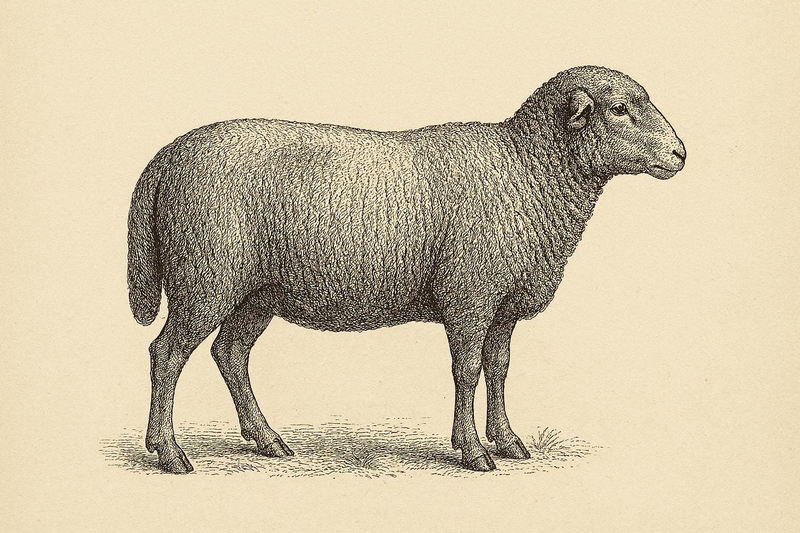
Sheep
Nutritional information per 100 grams
Nutrition Facts
| Calories | Protein | Fat | Carbs | Sugar | Fiber |
|---|---|---|---|---|---|
| 294 | 25g | 21g | 0g | 0g | 0g |
Highlights
Coming soon
About This Meat
Sheep meat from mature animals, commonly referred to as mutton, provides a robust nutritional profile shaped by the animal's ruminant physiology and predominantly grass-based diet. It is richer in fat than lamb, with a macronutrient composition that skews toward higher energy density and a greater proportion of both saturated and monounsaturated fatty acids. The protein content is complete, delivering all essential amino acids to support muscle protein synthesis, immune protein production, and connective tissue maintenance. Mutton is a meaningful source of heme iron, with concentrations generally exceeding those found in pork and poultry, and supporting daily requirements for oxygen transport, energy production, and red blood cell synthesis. Zinc is present in substantial quantities and is essential for androgen metabolism, immune cell function, and protein synthesis regulation. B12 is supplied at high levels, consistent with its ruminant origin, and is critical for the integrity of the myelin sheath, homocysteine metabolism, and neurological performance. Niacin contributes to NAD synthesis and the cellular energy metabolism pathways occurring within the mitochondria. Riboflavin supports FAD-dependent enzyme activity and the metabolism of fats and proteins at the cellular level. Selenium is present and supports both antioxidant defense and thyroid hormone metabolism. Mutton fat contains conjugated linoleic acid, a naturally occurring fatty acid with roles in body composition and cellular signaling, produced through ruminant biohydrogenation in the gut. The saturated fat in sheep meat primarily consists of stearic and palmitic acid, the former of which is converted to oleic acid in the body and does not adversely affect lipid metabolism in the same manner as shorter-chain saturated fats. Phosphorus supports structural and energetic functions including bone mineralization and phospholipid synthesis. The fat-soluble vitamins A, D, E, and K2 are present in sheep fat and organ-adjacent tissues, supporting cellular differentiation, calcium metabolism, oxidative protection, and vascular function. Mutton provides a high-caloric-density, nutrient-rich protein option suited to individuals with elevated energy needs or those consuming lower meal volumes.
Vitamins & Nutrients
- Cholesterol: 95mg (steroid hormone production including cortisol and sex hormones, bile salt precursor, cell membrane function)
- Sodium: 72mg (osmotic regulation, action potential generation, electrolyte maintenance)
- Potassium: 310mg (intracellular osmolarity, cardiac conduction, neuromuscular signal transmission)
- Iron: 2.5mg (hemoglobin heme group structure, oxygen delivery to tissues, mitochondrial electron transport)
- Zinc: 4mg (immune signaling, testosterone and insulin formation, wound repair, cellular proliferation)
- Selenium: 25mcg (selenocysteine enzyme function, antioxidant protection, thyroid hormone synthesis)
- Vitamin B12: 2.8mcg (red blood cell formation, neurological health, methionine cycle support)
- Vitamin B6: 0.3mg (transamination and deamination of amino acids, glycogen phosphorylase activation)
- Niacin (B3): 6mg (NAD and NADP biosynthesis, cellular energy metabolism, skin and mucosal integrity)
- Riboflavin (B2): 0.25mg (FAD and FMN enzyme cofactor roles, oxidative energy pathways)
- Thiamin (B1): 0.12mg (branched-chain amino acid metabolism, oxidative decarboxylation, neural signaling)
- Pantothenic Acid (B5): 0.55mg (coenzyme A precursor, steroid synthesis, fatty acid oxidation support)
- Vitamin E: 0.6mg (peroxyl radical quenching, immune cell membrane protection, antioxidant defense)
- Magnesium: 22mg (skeletal muscle contraction, ATP stabilization, nerve impulse regulation)
- Phosphorus: 190mg (hard tissue mineralization, cellular signaling via phosphorylation, energy metabolism)
- CLA (Conjugated Linoleic Acid): 80mg (lipid metabolism modulation, body composition support, anti-inflammatory activity)
These values are approximate and can vary based on factors such as the specific cut of beef and cooking method.